Ask ten divers how they carry their action camera and you will get ten answers: a strap on the mask, a mount on the wrist, a harness on the chest, a floating pole, a tray with lights, or, increasingly, a mount on the regulator second stage. Each one solves a problem and creates another. This guide compares them honestly, with the trade-offs we have learned from years of diving with cameras in every one of those positions, so you can match the mount to the diving you actually do.
Key takeaways
- The best mount depends on your goal: effortless POV documentation, deliberate cinematography, or something in between.
- Head and mask mounts give POV but sit in the exhaust bubble stream and above your eye line.
- Wrist and chest mounts are hands-free but aim where your arm or torso points, not where you look.
- Poles and trays deliver stable, framed shots but occupy your hands and add task loading.
- A regulator mount combines true POV, no exhaust bubbles in frame and a camera you can always see.
What actually matters in an underwater camera mount
Before comparing hardware, define the criteria. After hundreds of filmed dives, these are the ones that decide whether footage gets watched or deleted:
- Angle accuracy: does the lens point where your eyes point? If not, you will miss the turtle you turned to look at.
- Bubble interference: exhaled gas rises from the exhaust tee past your face and head. Any lens in that column records a shimmering curtain.
- Hands-free operation: buoyancy, inflator, gauges, light and your buddy all need hands. So do spearguns, reels and slates.
- Visibility of the camera: can you see whether it is recording without stopping to check?
- Loss risk: how likely is the camera to be knocked off, dropped or left behind?
- Drag and snag profile: anything that sticks out catches current, kelp and line.
- Task loading: how much attention does the camera demand? Our guide to task loading and camera gear explains why this matters more than most divers think.
Head and mask mounts
Head straps and mask-strap mounts were the first popular POV option, and they do follow your head. The problems show up once you are horizontal in the water.
The lens sits several inches above your eyes, so the camera sees over the subject you are looking at, and many divers end up with footage framed slightly high. More importantly, your exhaust bubbles rise from the regulator, roll over your face and stream past the top of your head, right across a head-mounted lens. Every exhale puts a silver wobble in the frame. You also cannot see a camera mounted on your head, so you never know whether it is recording, and a strap that shifts can tug on your mask, which is the last thing you want during a dive.
Best for: snorkeling and surface swimming, where bubbles are not a factor.
Wrist mounts
Wrist mounts keep the camera close and are easy to point deliberately. In practice, your arms are constantly doing other jobs: dumping air, checking a computer, signaling a buddy, sculling for position. Each of those movements swings the camera. The result is footage of your gauges, your fins and a lot of random water. Wrist mounts also put the camera at reef height, which raises the odds of contact with coral, and a quick-release wrist strap is a common source of lost cameras.
Best for: divers who want to occasionally aim at something specific without carrying a handle.
Chest mounts
A chest harness or BCD strap mount is hands-free and stable, because your torso moves less than your head. The catch is orientation. In good horizontal trim your chest faces the bottom, so a chest camera points down at the sand or reef beneath you unless you tilt it significantly. Hoses, inflator, octopus and your own arms frequently block the frame. And you cannot see the camera at all without craning your neck.
Best for: divers who want a steady, wide, downward-looking record of the reef, such as survey-style footage.
Poles, floating grips and selfie sticks
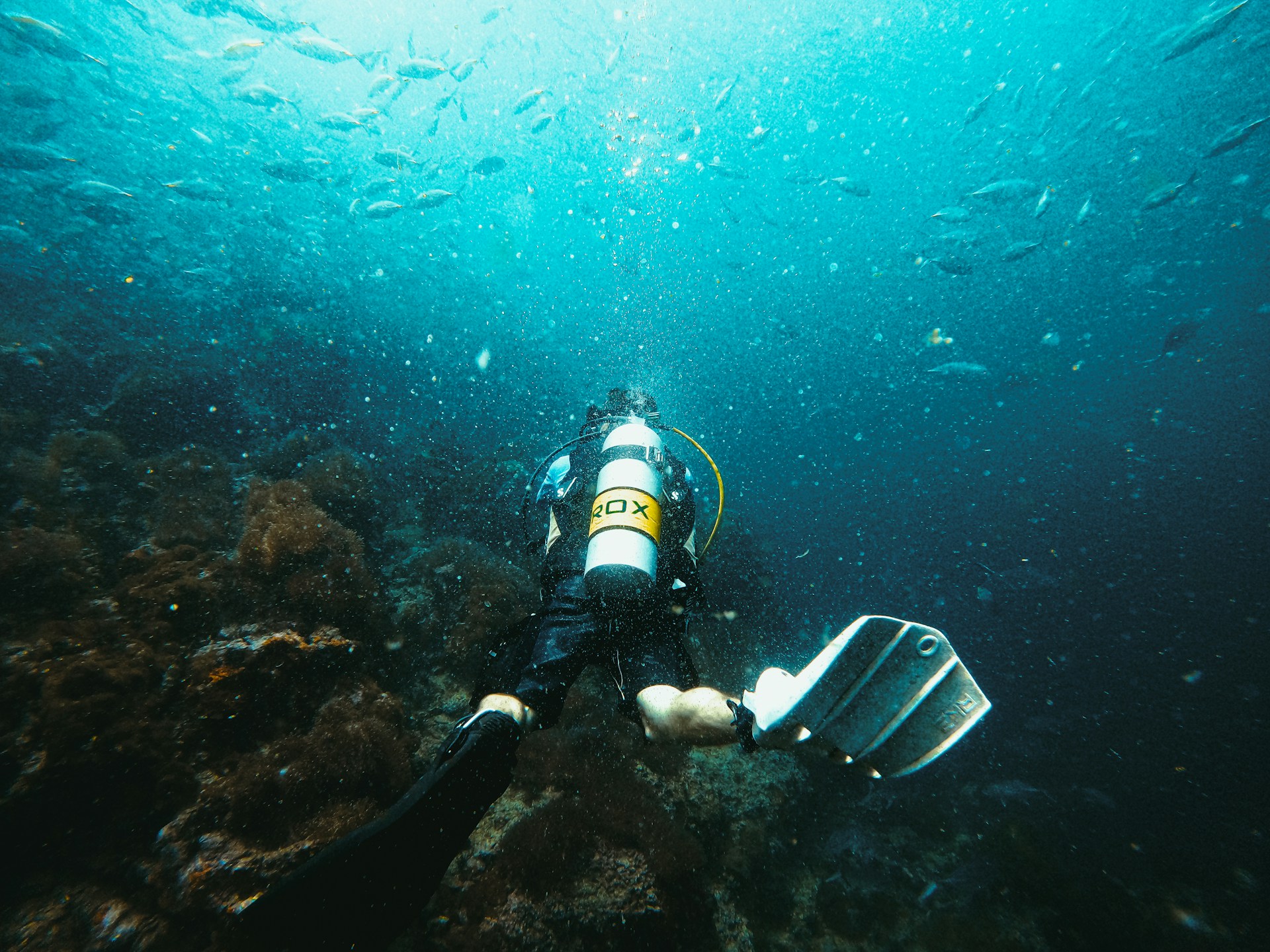
A pole or floating grip extends your reach and smooths out hand shake. It is excellent for selfies and for getting the camera closer to shy subjects without moving your body. The downsides are the ones every instructor has seen: one hand is permanently occupied, the pole becomes a lever that is easy to bump into the reef, and a camera on a stick is easy to set down, let go of or drop when you need both hands. Floating grips help with recovery at the surface, but they do not help much at 60 feet in current.
Best for: shallow, calm dives and snorkeling, and divers who want selfie-style shots.
Trays and handles with lights
A dual-handle tray with video lights on arms is the right tool for deliberate cinematography. You can frame, hold a shot steady, light a subject and control distance precisely. Nothing on this list matches a well-handled tray for composed macro and wide-angle shots.
The price is size, drag and attention. A tray rig occupies both hands, adds significant bulk, needs its own buoyancy trimming and turns you into a photographer first and a diver second. That is fine when it is a deliberate choice on a dive planned for filming. It is a problem when you are also responsible for navigation, a new buddy or a hunt.
Best for: dedicated video dives by experienced divers with excellent buoyancy.
Regulator mounts
A regulator mount clamps the camera directly to the second stage, in front of the exhaust. We designed RegMount this way after it began life as a hands-free spearfishing camera, where the diver had to keep both hands on the gun and always know where the camera pointed. Three years of testing and ten prototypes later, the regulator turned out to be the one spot that solves most of the problems above at once.
- True POV: the regulator moves with your head, so the lens points where your eyes look.
- No bubbles in frame: the lens sits ahead of the exhaust, so the bubble column rises behind it.
- Always visible: the camera sits in your lower field of view, so you know at a glance whether it is on.
- Hands-free and low profile: nothing to hold, nothing on a strap and little added drag.
- Purge access: the purge button stays completely unobstructed.
Trade-offs exist. Because the camera follows your head, quick glances become fast pans, so you have to learn to look slowly (our POV composition tips cover this). The camera is part of your breathing apparatus, so you must plan air sharing with your buddy and practice regulator recovery with it attached. And it only fits regulators within its design range: most second stages with a body diameter of 2 3/8″–3 1/8″ (60–80 mm), which you can confirm on our fit guide.
Pro tip: Many RegMount owners move the camera to their octopus for a few minutes to film selfies with their buddy, or to slide it under a ledge to see what is hiding there. The same adapter also works as a light mount, so one mount can cover several jobs.
Side-by-side comparison
| Mount | Hands-free | True POV | Exhaust bubbles in frame | Camera visible to you | Drag / snag | Best for |
|---|---|---|---|---|---|---|
| Head / mask | Yes | Partly (high) | Often | No | Low | Snorkeling |
| Wrist | Mostly | No | Rarely | Sometimes | Low to medium | Occasional aimed shots |
| Chest | Yes | No (points down in trim) | Rarely | No | Low | Reef survey footage |
| Pole / grip | No (one hand) | No | Rarely | Yes | Medium | Selfies, shallow dives |
| Tray with lights | No (two hands) | No | Rarely | Yes | High | Planned cinematography |
| Regulator (RegMount) | Yes | Yes | No (lens ahead of exhaust) | Yes, at all times | Low | Everyday POV, spearfishing, documenting dives |
How to choose: match the mount to the dive
You want a record of every dive without thinking about the camera
Choose a hands-free position that follows your eyes. That is exactly the gap a regulator mount fills. You attach the camera, start recording on descent and dive normally.
You spearfish or carry tools
Both hands are committed, and you need the camera to see what you see. A regulator mount is the reason RegMount exists. Our guide to recording spearfishing hunts covers safety, regulations and ethics.
You are building a portfolio of composed shots
Use a tray with lights on dedicated filming dives, and consider a regulator-mounted camera as a second angle that captures the context, your buddy and the dive itself.
You are a newer diver
Prioritize buoyancy and buddy skills over footage. If you carry a camera at all, pick one that demands zero hands and minimal attention, keep it tethered, and leave the tray for later.
Dive within your training. Any camera adds task loading. NSS-CDS standards call for a minimum of 100 dives in an overhead environment before adding extra equipment there. Familiarize yourself with any mount before using it in open water, and brief your buddy on your configuration.
Combining mounts
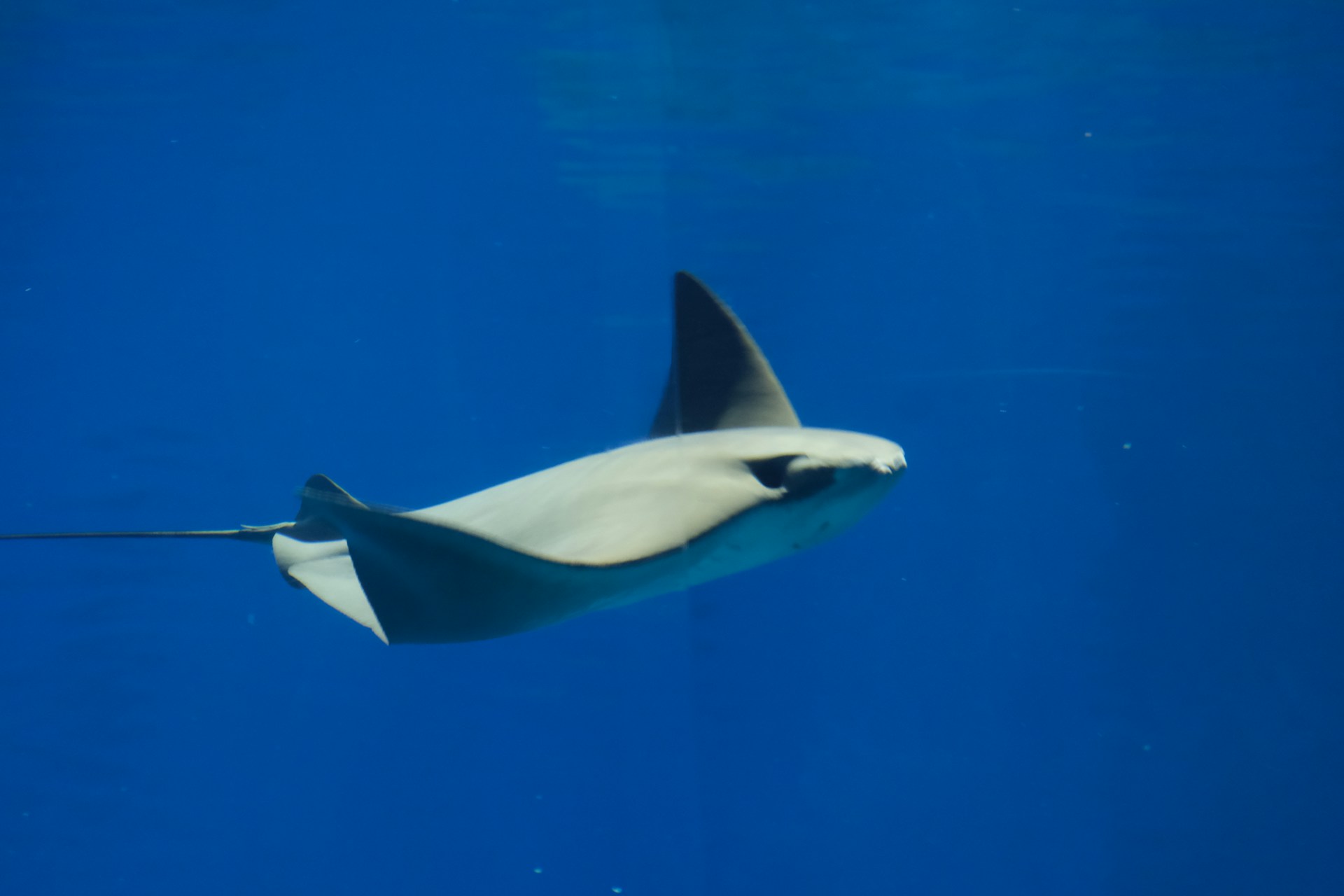
Many experienced shooters run two cameras: a tray for the hero shots and a regulator-mounted camera rolling continuously. The POV camera catches the moments that happen while you are setting up the main shot, such as a manta passing behind you or your buddy pointing at something. In the edit, those two angles cut together naturally. If you go this route, keep each camera tethered and keep the total rig simple enough that you could hand it off or clip it away in an emergency.
Whichever direction you choose, footage quality depends as much on settings and technique as on the mount. Start with our best GoPro settings for scuba diving.
Try the mount that sees what you see
RegMount clamps to your second stage in seconds, keeps your hands free and keeps bubbles out of the shot. Kit $34.99, free U.S. shipping.
Frequently asked questions
Why are there bubbles in my head-mounted GoPro footage?
Exhaled gas leaves the regulator exhaust tee and rises past your face and over your head. A camera mounted on your head or mask sits right in that column. A regulator mount places the lens ahead of the exhaust, so the bubbles rise behind it.
Is a chest mount good for scuba diving?
It is stable and hands-free, but in horizontal trim it points toward the bottom, and hoses or arms often block the view. It suits wide downward reef footage more than POV storytelling.
Does a regulator mount add drag?
Very little. The camera sits close to your face, in a position already occupied by your second stage, so it adds far less frontal area than a tray or pole.
Can I still use a tray if I buy a regulator mount?
Yes. Many divers use both: the tray for deliberate shots and the regulator camera for continuous POV coverage. Just keep your total task load within your experience.
Which mount is least likely to lose my camera?
Any mount can fail if it is installed poorly. A camera you can see at all times, secured by a clamp and backed up with a tether, is the hardest one to lose without noticing.