RegMount started as a spearfishing tool. We needed a camera mount that was completely hands-free, simple, and pointed exactly where the diver was looking, so we went outside the box and put the camera on the regulator second stage. Three years of testing and ten prototypes later, we had the product. Then customers started using it in ways we hadn’t planned: moving it to the octopus for selfies, sliding the camera under rock ledges, and using it as a light mount. This guide collects the best of those ideas, how to set each one up, and the safety rules that go with them.
Key takeaways
- The standard setup, camera on your primary second stage in front of the exhaust, is still the best everyday configuration for bubble-free POV video.
- Moving RegMount to your octopus (alternate air source) unlocks selfies, buddy shots and ledge probing without taking your primary out of your mouth.
- RegMount also works as a mount for small, compact dive lights, putting the beam where you look.
- Any setup on an alternate air source must keep it instantly available for an out-of-air buddy. Practice before you rely on it.
- Test every new configuration on an easy, shallow dive first.
The baseline: primary second-stage POV
Before getting creative, it’s worth understanding why the standard setup works so well, because every variation below trades away some of those benefits.
- No bubbles in the shot. The camera sits in front of the exhaust, so exhaled bubbles rise behind the lens instead of across it.
- True point of view. The camera points where your head and eyes point, so you film what you are actually looking at.
- Always in sight. You can see the camera on every dive, so you know whether it’s recording and you won’t lose it.
- Purge button access. The mount leaves the purge button completely unobstructed.
If you haven’t installed it yet, start with our step-by-step guide on how to mount a GoPro on your scuba regulator and check compatibility in the fit guide. RegMount fits most second stages with a body diameter of 2 3/8″ to 3 1/8″ (60–80 mm).
1. The octopus selfie
This is the customer favorite. Instead of mounting the camera on your primary, you mount it on your octopus. Underwater, you can hold the octo out at arm’s length and turn it back toward yourself, your buddy or a group, then let it return to its normal position when you’re done.
Why it works
- You get footage of you: your reactions, your buddy beside you, the turtle you’re swimming with.
- The hose gives you a natural “selfie stick” with nothing extra to carry.
- Your primary stays in your mouth the entire time.
How to set it up
Check the octo fits
Measure your alternate’s second-stage body. Many octos are the same model as the primary, but some are smaller. Use the fit guide if you’re unsure.
Install the clamp and adapter
Fit the stainless steel clamp over the protective silicone band and snug it down. The clamp uses a metric nut, so use a metric tool rather than forcing an imperial one.
Purge and breathe-test on the surface
Confirm the purge button is fully accessible and the octo breathes normally with the camera attached. Have your buddy look at it from the donation position.
Stow it correctly
Keep the octo in its normal, clearly visible position in the triangle between your chin and the lower corners of your rib cage, secured the way your training taught you. Don’t stuff it into a pocket because the camera makes it bulkier.
Practice an air-share
In calm, shallow water, have your buddy grab and breathe from the octo with the camera attached. You want to know in advance exactly how it handles.
Safety first: Your octopus is life-support equipment for your buddy. If they need it, they take it, camera and all, and nobody thinks twice about the footage. If a camera on your alternate causes any hesitation, confusion or difficulty during donation, move it back to your primary. Use a camera safety tether if you want a backup against loss, keeping it short and tidy so it never tangles the hose.
Selfie tips
- Hold the octo about an arm’s length away. Wide action-camera lenses distort faces when they’re too close.
- Keep the sun or the brightest water behind the camera, not behind you, to avoid a silhouette (unless that’s the look you want).
- Slow, small movements. Waving the hose around produces seasick footage.
- Get your buddy in the frame. Two divers and a reef tell a better story than one face filling the screen.
2. Probing under ledges and rock shelves
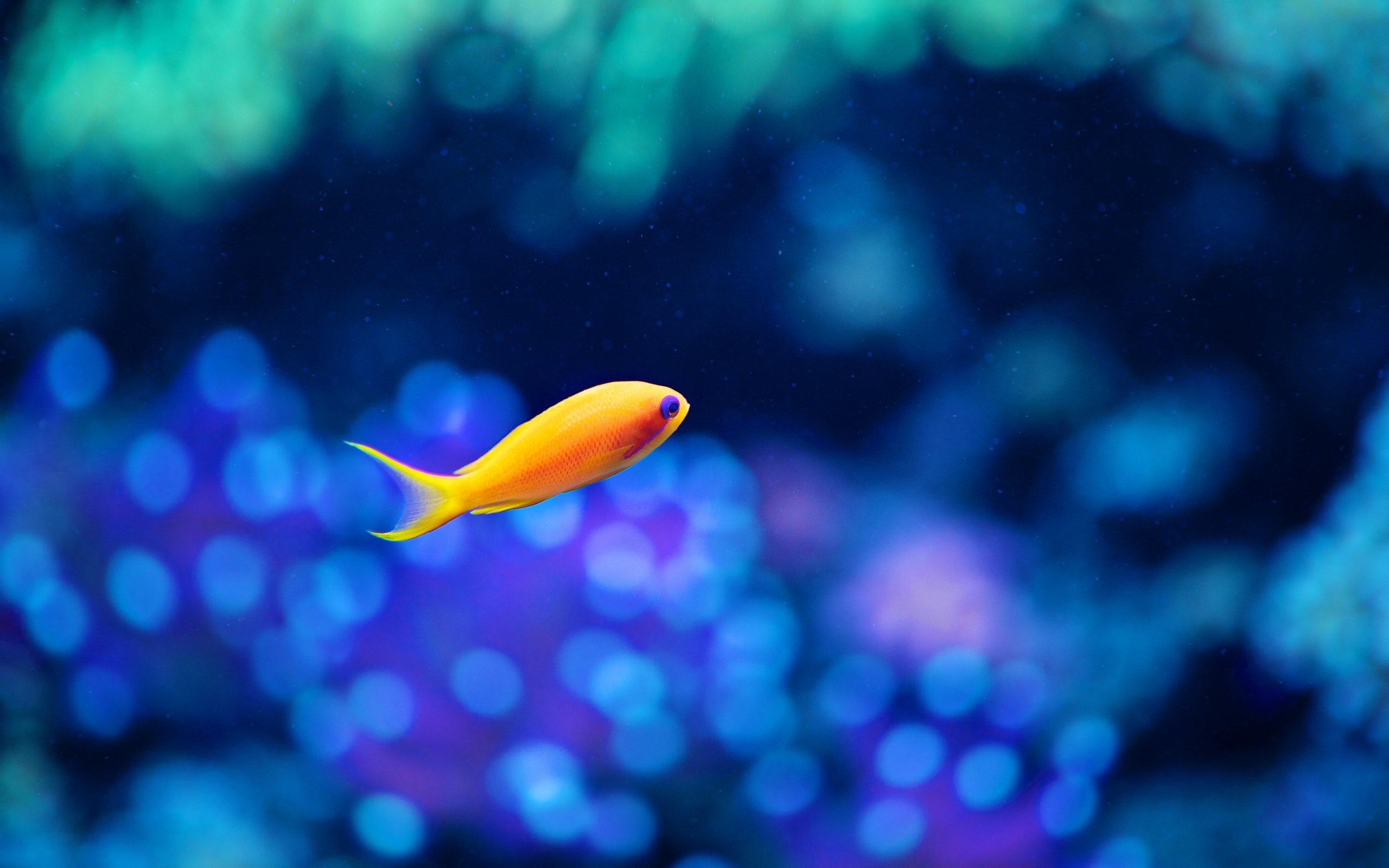
Ledges, overhangs and holes are where a lot of marine life lives: lobsters, moray eels, groupers, nurse sharks and octopus. Getting your head in there is a bad idea; getting a small camera in there is easy. Divers use the octopus-mounted camera to look under rock shelves and into crevices while their body stays a safe distance away.
How to do it well
- Settle first. Get neutrally buoyant and stable a short distance from the ledge. Never kneel on reef or living bottom to reach.
- Slide, don’t jab. Ease the camera under the ledge slowly and hold it still for several seconds. Animals react to sudden movement.
- Mind the lens. Rock is hard on lens covers. Keep a little distance from the ceiling and floor of the ledge.
- Use a light. Ledges are dark. A small light helps, or record and color-correct later.
- Review on the boat. You often find animals in the footage you never saw in person.
Lobster hunters in particular like this technique for checking holes before reaching in. If you’re hunting, know and follow your local seasons, size limits, bag limits and gear rules, which vary by state and species. Our article on recording your spearfishing hunts covers regulations and ethics in more detail.
Watch your hands: The point of ledge probing with a camera is that your hands and face stay out of the hole. Moray eels, scorpionfish, fire coral and sea urchins all live in exactly these spots. Let the camera look first.
3. Mounting a dive light
Because RegMount uses the standard GoPro-style mount interface, it can also carry a compact light with a compatible mount. With the light on your second stage, the beam goes wherever you look, which is handy for peeking into crevices on a day dive, reading gauges in murky water or adding a little fill light for your camera.
| Light type | Good fit for RegMount? | Notes |
|---|---|---|
| Small, compact light with GoPro-style mount | Yes | Lightweight, low drag; ideal for fill light and looking into holes |
| Small video light (wide beam) | Often | Check weight and size; heavy lights can pull on the mouthpiece |
| Large handheld primary or canister light head | No | Too heavy and too important to hang off your mouthpiece |
Keep in mind that a light on your second stage is pointed at whatever you’re looking at, which sometimes includes your buddy’s face. Be considerate, and remember that in many forms of diving, light movement is a communication signal. Lighting is also not a substitute for your primary and backup lights on night or low-visibility dives.
Pro tip: Many small dive and video lights get hot when run out of water. Switch the light on just before you descend and off right after you surface.
4. Spearfishing and hunting footage
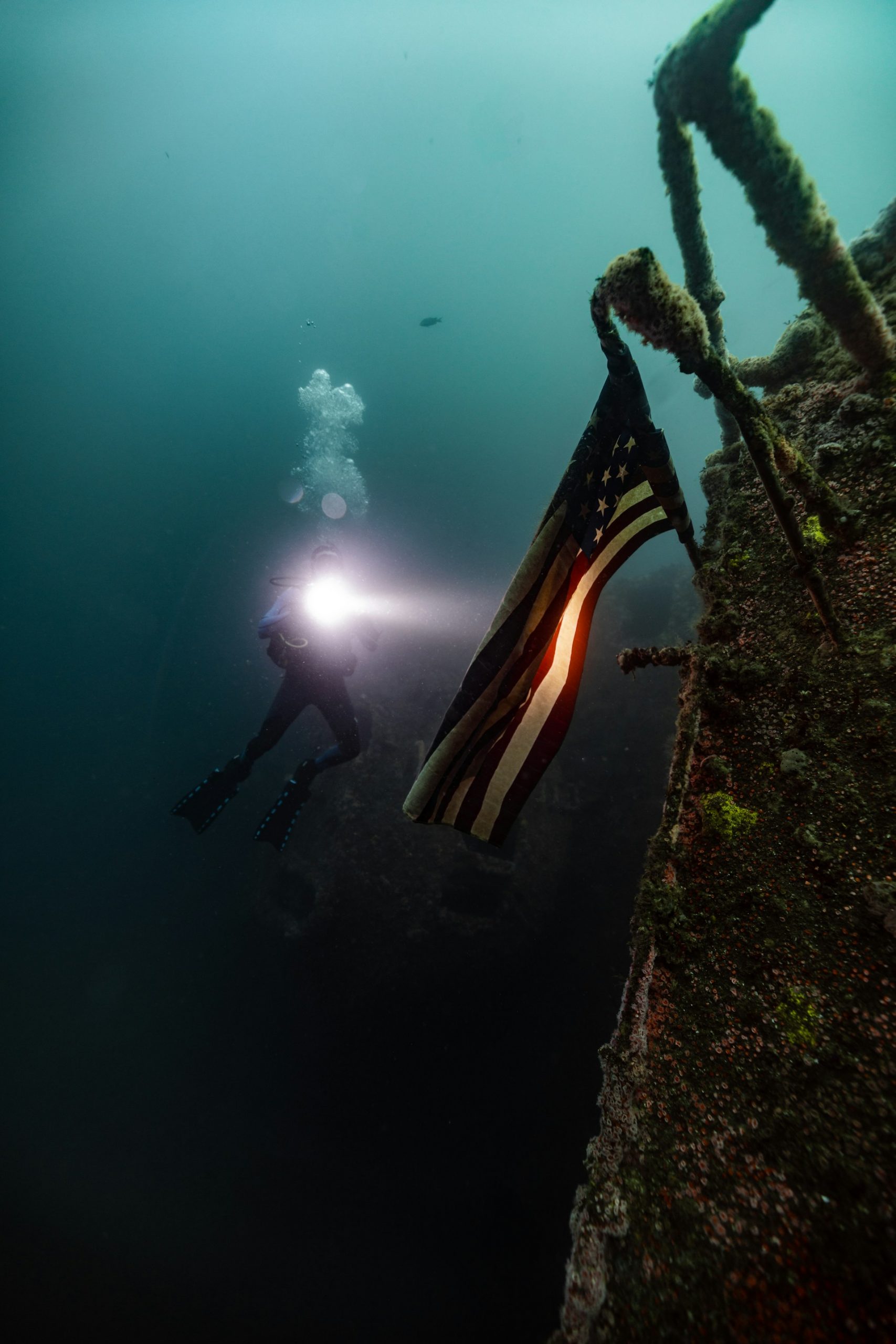
This is where RegMount began. When you’re hunting, your hands are full with a speargun or pole spear, your attention is on the fish, and you need to see where the camera is pointed without thinking about it. A regulator-mounted camera records the stalk, the shot and the recovery from your exact point of view. Footage also helps you review your approach and shot placement after the dive.
As always: know your local regulations, respect protected species and areas, and never let filming distract from line management, your buddy or your gas supply.
5. Training, review and documentation
A true POV angle is useful beyond pretty footage:
- Skill review. Watching your own footage reveals a lot about your trim, kicking and how often you look at your gauges.
- Site documentation. Mooring checks, reef surveys with a dive club, recording the condition of an artificial reef over several seasons.
- Trip memories. Because the camera is always on and always pointed where you look, you capture the whole dive without “photographer mode” taking over.
6. Using the Accessory Pack for other angles
The RegMount Accessory Pack includes a J-hook adapter, 3M adhesive and a universal base clip mount, which gives you more options for fine-tuning your camera’s angle on the regulator and extra pieces for other mounting spots. The J-hook adapter helps you dial in the camera’s tilt so your POV framing sits right, and the adhesive and universal base clip mount give you an extra mounting point for your camera when you want a different angle. Clean and dry surfaces thoroughly before using adhesive mounts, and give them time to cure before getting them wet.
Choosing the right configuration
| Goal | Best setup | Main trade-off |
|---|---|---|
| Bubble-free POV of the whole dive | Primary second stage (standard) | None for most divers; the default choice |
| Selfies and group shots | Octopus | Camera goes with the octo if donated |
| Looking under ledges | Octopus | Requires good buoyancy and care with the lens |
| Beam where you look | Compact light on second stage | Weight limits; be mindful of buddies’ eyes |
| Spearfishing | Primary second stage | None; this is what it was designed for |
Mistakes to avoid
- Over-tightening the clamp. Snug is enough; the silicone band and clamp do the work.
- Mounting anything heavy enough to pull on your jaw. If you need the chin stabilizer just to hold it up, it’s too heavy.
- Using a new configuration for the first time on a deep, cold or high-current dive.
- Forgetting that whatever is on your octo goes to your buddy in an emergency.
- Letting a creative shot pull you away from your buddy or past your planned depth.
One mount, a lot of possibilities
The RegMount Complete Diver Kit bundles the RegMount kit with the Accessory Pack, so you’re ready for POV video, octo selfies, ledge probing and light mounting from day one.
Frequently asked questions
Can I move RegMount between my primary and my octopus during a dive?
We don’t recommend it. Swapping requires loosening and re-tightening the clamp, which is task loading you don’t need underwater. Decide on the surface which second stage gets the camera for that dive.
Is it safe to put a camera on my alternate air source?
It can be, if the octo stays clearly visible, the purge button stays accessible and you’ve practiced an air-share with the camera attached. Your buddy’s access to air always comes first. If the setup causes any hesitation during donation, move it back to your primary.
Will RegMount hold a dive light?
Yes, a compact light with a GoPro-style mount works well. Keep it small and light. Large primary lights and canister light heads should not be mounted on a second stage.
Do I get bubbles in the shot when the camera is on my octo?
When you’re not breathing from the octo, there are no exhaust bubbles from it, so octo footage is bubble-free. Your primary’s bubbles can drift into the frame if you point the octo back toward your face, so angle it slightly to the side.
What does the Accessory Pack add?
A J-hook adapter, 3M adhesive and a universal base clip mount, giving you more ways to set the best POV angle and extra mounting points for your camera.